


Healing Through a Different Lens — Part One
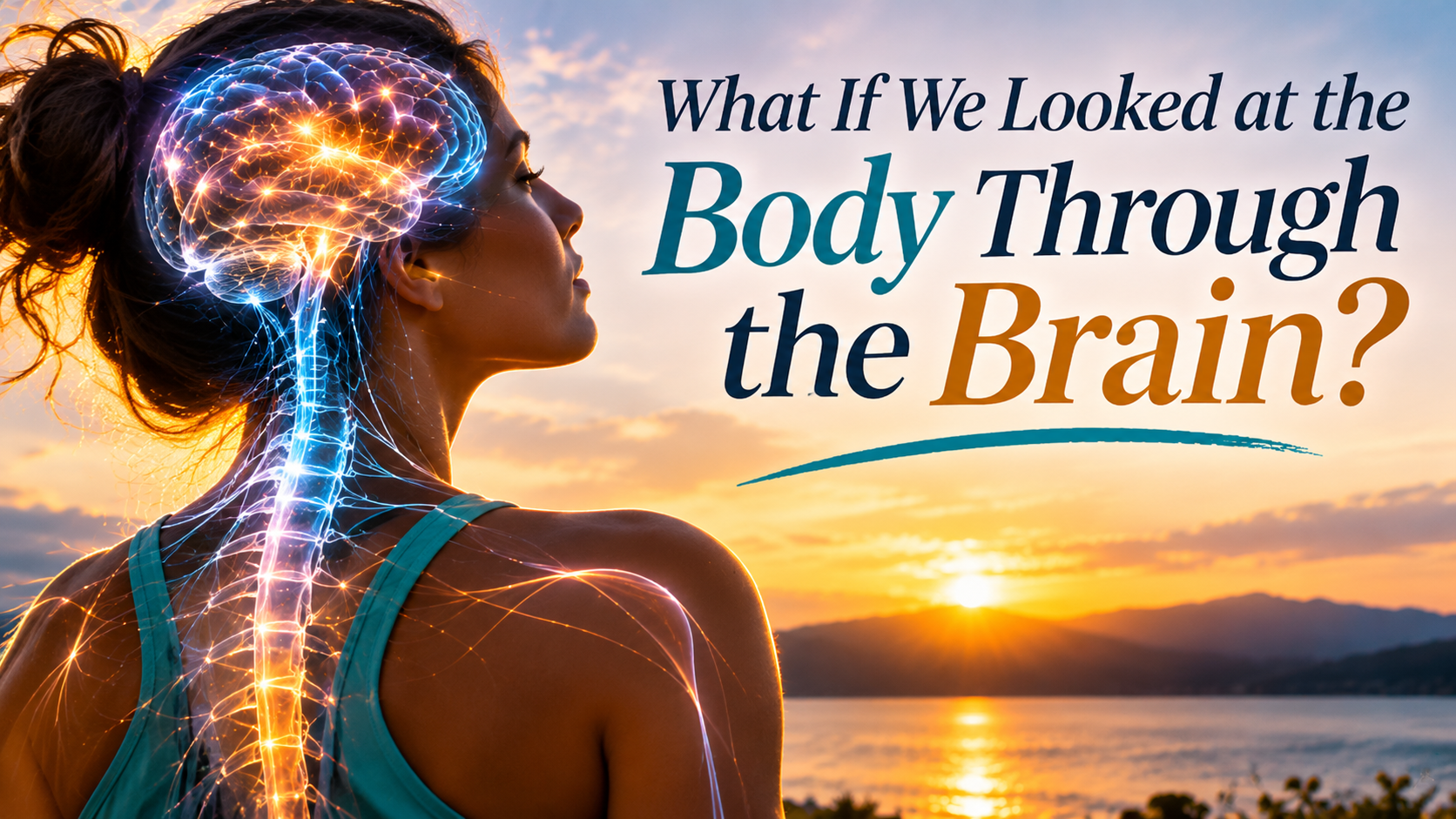
Have you ever wondered why two people can experience the same physical activity but respond completely differently? One person moves with ease, while another struggles with balance, stiffness, or discomfort. We often assume the problem must be in the muscles, joints, or even age. But what if we’re overlooking something important? What if we started looking at the brain?
This question is at the heart of an approach I’ve been exploring through the work of Stuart Gong and Z-Health, a system that focuses on the relationship between the brain, nervous system, and physical movement.
The Brain Is Always Paying Attention
Think about everything your brain does without you consciously thinking about it. You walk across a room, reach for a glass, turn your head, or step off a curb. These movements seem automatic, but behind the scenes, your brain is constantly gathering information and making adjustments.
Your eyes provide information about your surroundings. Your inner ear helps you maintain balance. Your muscles and joints send signals about where your body is in space. Your brain takes all this information and uses it to help you move.
This is where applied neurology becomes interesting. Rather than focusing only on the part of the body experiencing difficulty, this approach considers how the nervous system processes information and coordinates movement.
What Is Z-Health?
Z-Health is a brain-based movement education system founded by Dr. Eric Cobb. It incorporates principles of neuroscience into exercises and assessments designed to explore how the brain and body work together.
Through Stuart Gong’s work, I’ve been learning more about this approach and the idea that improving movement may involve more than strengthening muscles or increasing flexibility.
For example, consider balance. We might assume that improving balance means strengthening our legs or practicing standing on one foot. While those activities can help, balance also depends on our vision, inner ear, and the brain’s ability to interpret information from the body.
The same principle applies to everyday movement. Our nervous system plays an important role in how we coordinate our movements, respond to our surroundings, and adapt to physical challenges.
Why This Matters as We Age
As we get older, we often begin accepting physical limitations as inevitable. We might notice that our balance isn’t quite what it used to be, our movements feel less coordinated, or certain activities require more effort. But aging doesn’t mean we should stop exploring ways to improve.
One of the most fascinating things about the brain is its ability to change through experience and practice. This ability, known as neuroplasticity, continues throughout our lives.
That doesn’t mean every physical limitation can be reversed. It does mean that learning, movement, and appropriate practice can continue to influence how our nervous system functions. And perhaps that’s a reason to remain curious rather than immediately accepting every change as permanent.
A Different Way of Thinking About Wellness
What interests me most about this approach is how closely it connects with the philosophy behind Mindful Your Life.
Mindfulness encourages us to pay attention to what we’re experiencing rather than simply moving through life on autopilot. Brain-based movement training also asks us to pay attention, but in a different way.
How do our eyes move? How does our balance change when we turn our heads? What happens when we slow down and become more aware of our movements? These questions invite us to become active participants in understanding our bodies.
Of course, it’s important to distinguish promising ideas from proven treatments. Research supports certain forms of targeted neurological rehabilitation, particularly for specific balance disorders, but that doesn’t mean every exercise or claim associated with brain-based training has been independently established. Still, understanding the relationship between the brain and body opens the door to some fascinating possibilities.
The Beginning of a New Perspective
I’ve always believed that learning shouldn’t stop when we leave the classroom. Whether we’re exploring mindfulness, meditation, movement, or the science of the brain, there is always something new to discover. That’s what makes this journey with Stuart Gong so interesting to me. It encourages us to ask questions, challenge assumptions, and become more aware of how our bodies function.
Perhaps the next time we experience stiffness, poor balance, or difficulty with movement, we can remember that our bodies are part of a much larger communication system. And sometimes, changing the way we look at a problem is the beginning of discovering something new.
Coming Next: Is Your Balance Really About Your Legs? We’ll explore how vision, the inner ear, and the brain work together to help us stay balanced.
You can also check out Mindful Your Life — Reimagining education through play, mindfulness, and connection.


